
I spend a lot of my free time browsing decor and design accounts on Instagram and Facebook, and I’m always amazed by the comments on photos and videos of rooms that include wallpaper. Beautiful and bold wallpapers are almost always well received and generally adored by commenters. But there are always a lot of comments from people saying they would never use wallpaper because it is so hard to remove.
I understand. I think we all understand it. Most of us DIYers have had the experience of trying to remove wallpaper that was installed in the 70s or 80s. And indeed, it is a nightmare to remove those wallpapers. They were often installed right on top of bare drywall, without primer or paint. They require vaporizers and chemicals to remove them. And even then, sometimes it’s as if these wallpapers were installed using some kind of polyurethane adhesive that was meant to survive the apocalypse and would require you to spend days scraping off a tiny centimeter at a time, if you’re lucky enough to be able to remove that much at a time.
I remember our little condo had wallpaper like that, and instead of trying to remove the wallpaper, I ended up using my sander on the walls to remove all the raised edges, and then drywalled the uneven areas, sanded the mud, and then primed and painted the walls. There was no way I was going to spend a week or two trying to completely remove that wallpaper, which had probably been installed in the ’70s, from the walls. You can see my entire process here.

But today’s wallpapers are very different. Most of them no longer come prepasted, so you can choose your own wallpaper adhesive. And the ones that come pre-glued today are very easy to remove when you’re ready to redecorate.
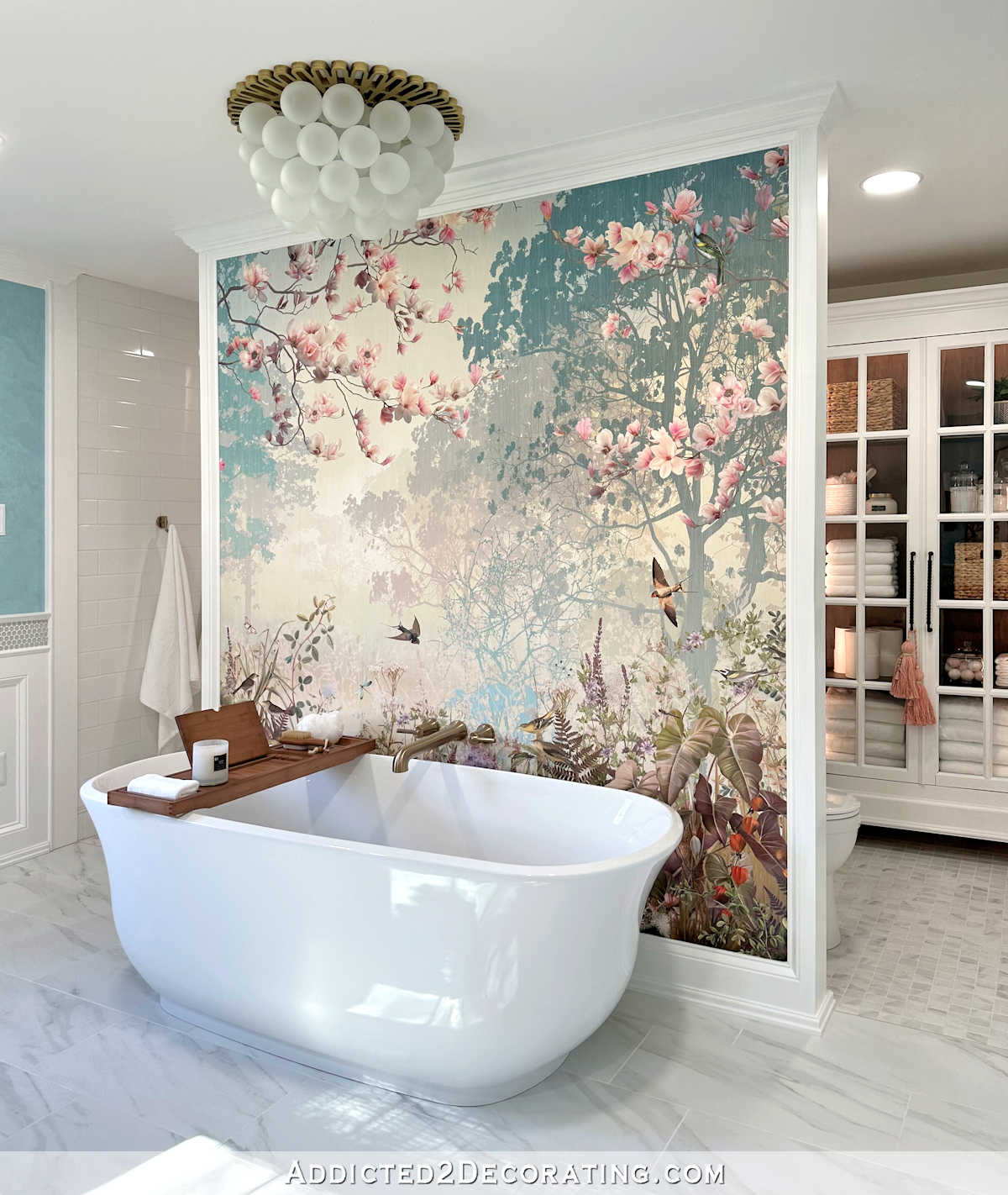
I’m a big proponent of wallpaper. I think a wallpaper or a mural can make an entire room. A room can go from “nice” to “WOW!” When someone enters our bathroom, the mural is almost always the first thing they comment on. I think our bathroom would be nice without it, but it would be a little plain. The mural takes it to the next level. This is the Sparkling Garden mural from Photowall.
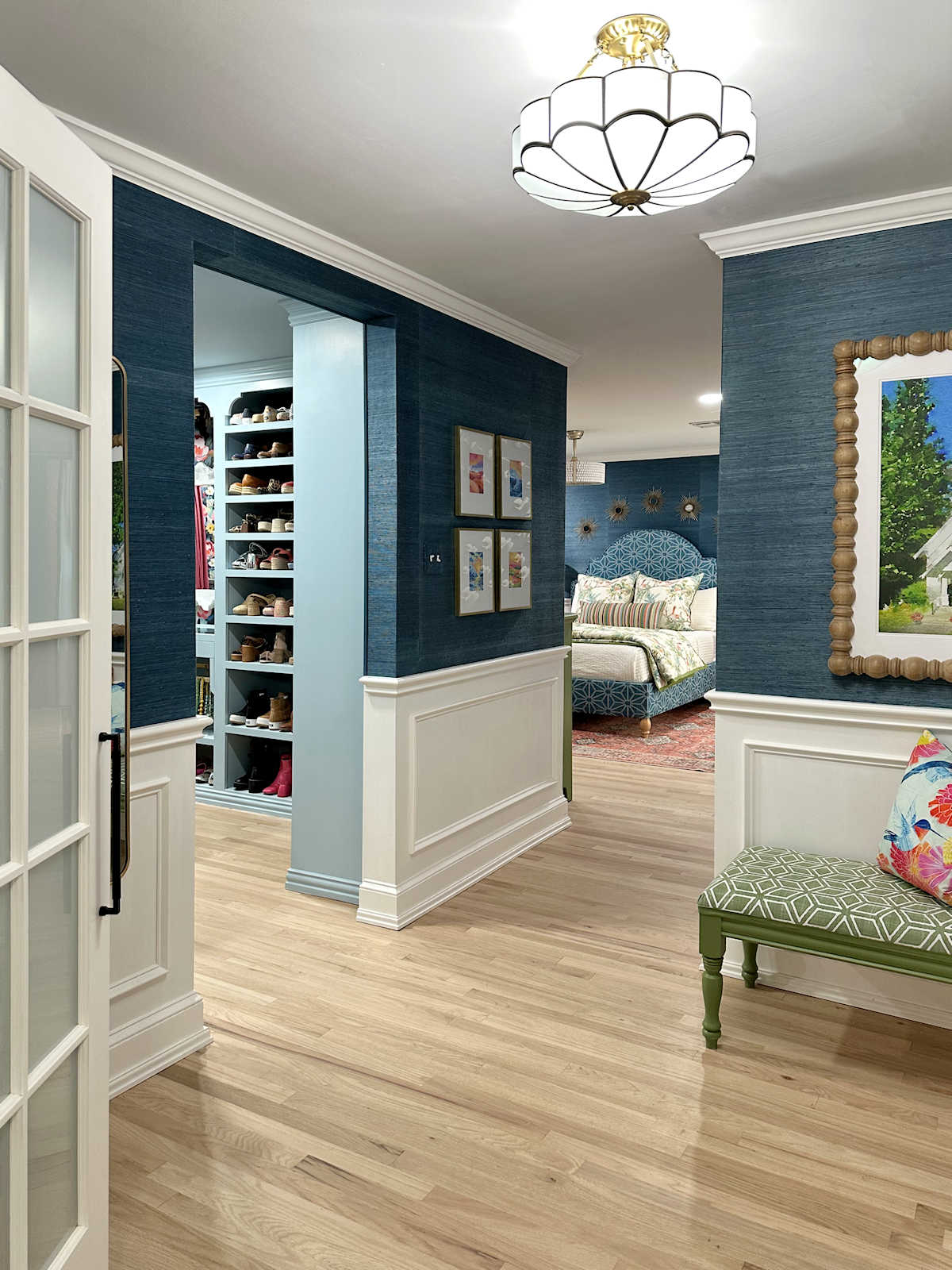
I feel the same way about our bedroom. I would still be happy with our bedroom if I had painted the walls a deep teal. But there’s something about grass cloth that lifts it up a bit and makes it look more “designer,” for lack of a better word.

Our bedroom walls are also the first thing people comment on when they see the space. It’s a look that you can’t really achieve with paint and makes the entire area feel so much more special.
And now I have this beautiful mural in the entrance. I liked this wall before, but there’s something magical about the impact a mural can have on a room that you can’t really achieve with a painted wall. This is the Paradise Tropical Floral mural from Anthropologie (affiliate link).

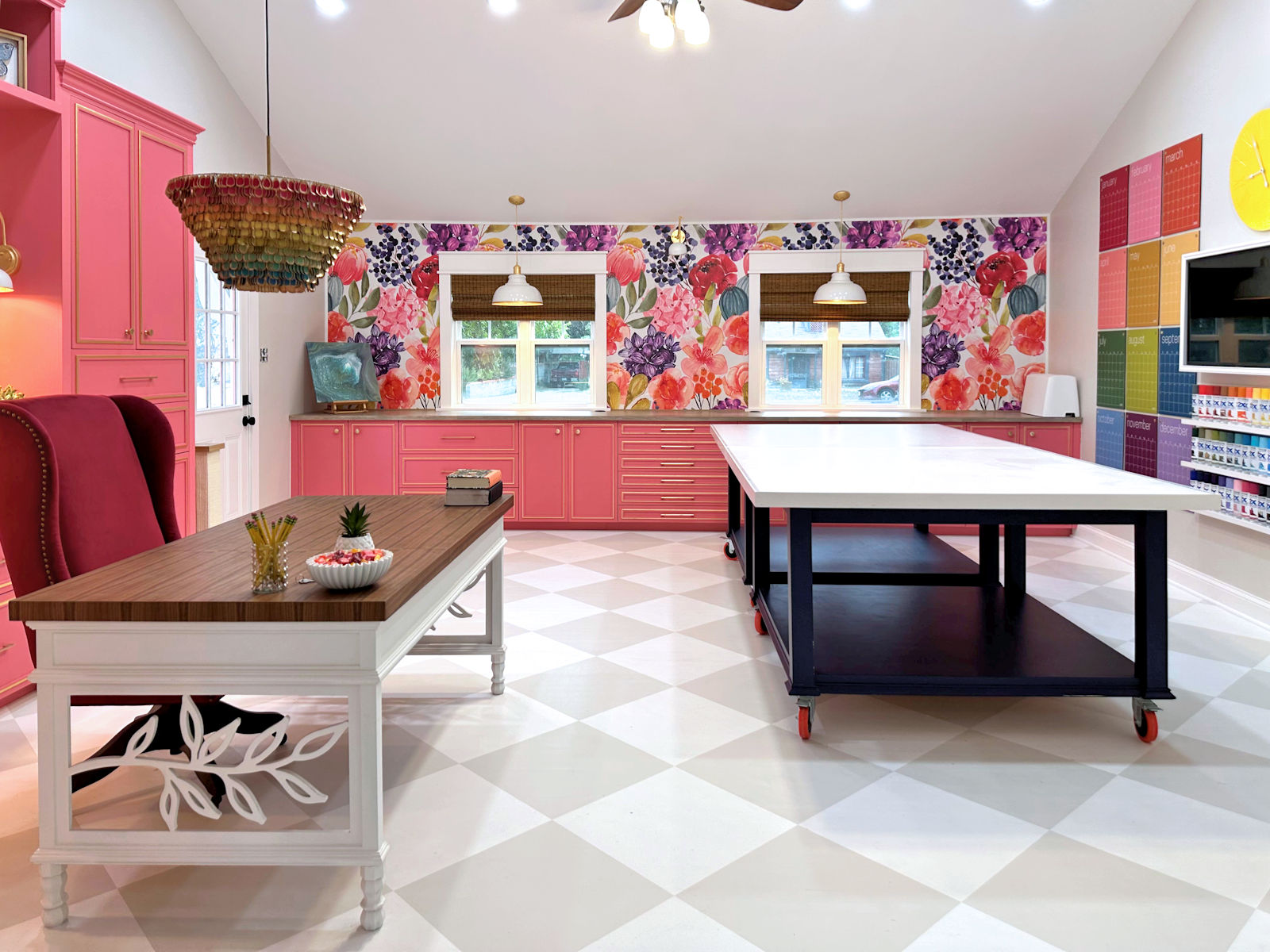
And, of course, the mural in my studio is the star of the room. I can’t imagine this room without it.
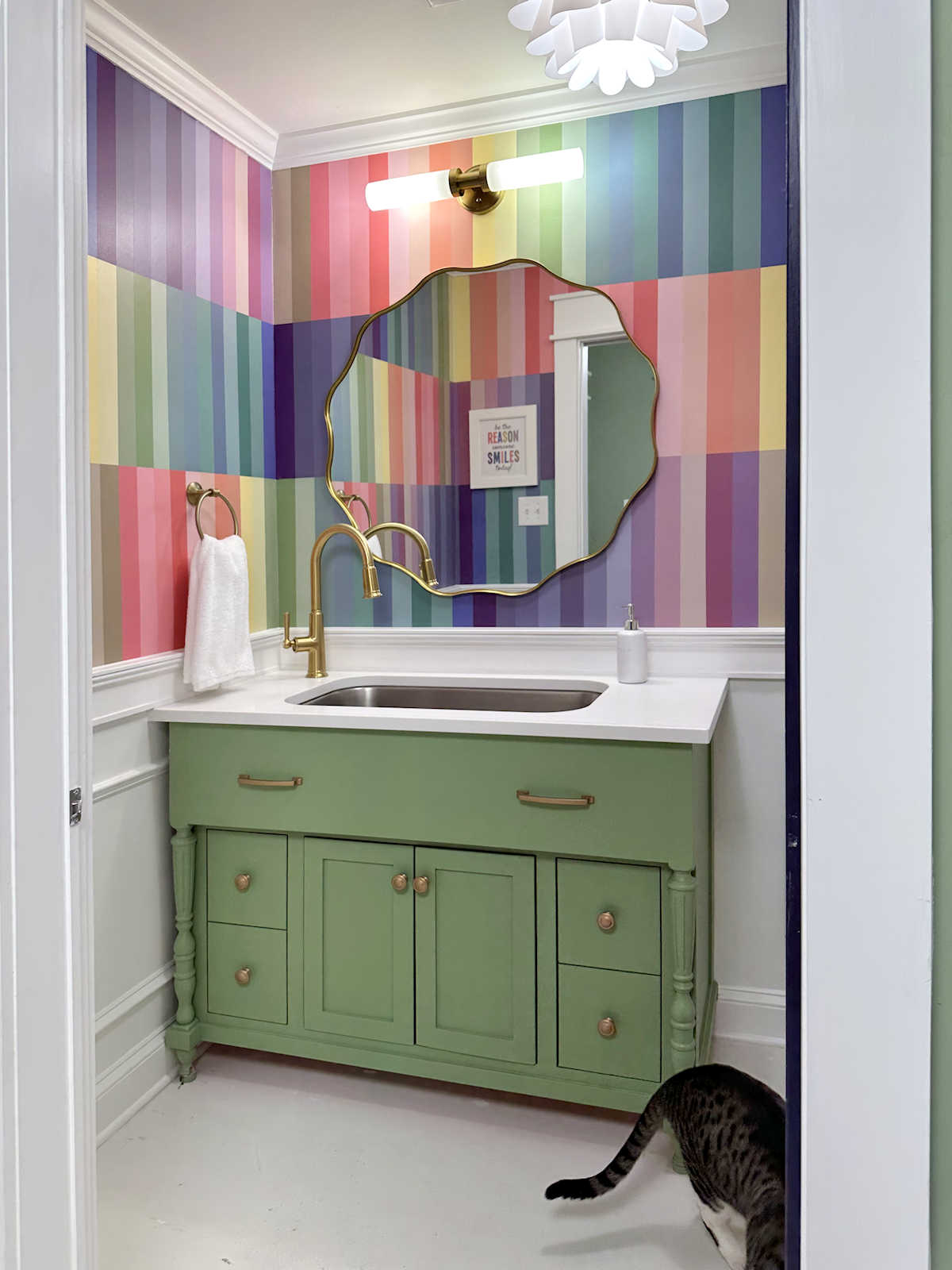
Of course, if you’re really afraid of wallpaper, or if you have a room where wallpaper just doesn’t work (and there are some rooms like that, which I’ll show you in a minute), you can always use paint to achieve a wallpaper look. That’s what I did in my studio bathroom. But for most of us, when it comes to achieving a wallpaper look with paint, we’re pretty limited by our artistic ability. Most of us are limited to designs that can be achieved with painter’s tape, like I did in the studio bathroom. And that limits us to linear designs.
And then, of course, there’s always the option of using a stencil, which is what I did in our music room. But even then, the design possibilities you can achieve with a template are quite limited compared to the hundreds of thousands of wallpaper options available.
Our music room was my only experience using a stencil on the walls, and I can tell you that I found it much more challenging than installing wallpaper. After that stenciling experience, if I had the choice between a stencil and wallpaper, I would choose wallpaper every time without hesitation.
Of course, there are rooms where I wouldn’t use wallpaper. For example, our breakfast room, which used to be an outdoor corridor that a previous owner closed to create more indoor space, seems to always be changing slightly. This is partly because our house has a pier and beam foundation and the ground in our area is always shifting and shifting slightly. But I notice it more in this room than in any of the others. You can see the change in the corners of this room where the paper in the corners (i.e. the paper that is applied before the drywall mud is applied) shifts and wrinkles.

Every corner of this room is like this. This is the opposite corner from the one above and looks the same. The four corners of this room look like this.

I would never use wallpaper in this room that wraps around the corners from one wall to the next because eventually, the wallpapered corners would look like that too. That’s a problem with many older homes. But in rooms like this, a wallpaper mural on a feature wall (if one is available) is still a viable option. Just make sure the wallpaper starts at one corner and ends at the opposite end corner of the wall.
As for the types of wallpapers and adhesives to use, I prefer wallpapers that are NOT prepasted. It costs a little more because you often have to purchase the adhesive separately (although some companies do provide it with your order, like my bathroom mural from Photowall), but I find it much easier to work with.
When I use wallpaper that is not previously pasted, I apply the paste with a roller and brush to the wall and then apply the wallpaper. And if you’re looking for a paste that’s easy to apply, easy to remove, and makes removing wallpaper a breeze, I recommend Roman Pro-880. As long as you apply wallpaper over painted drywall and have allowed the paint to dry completely, the wallpaper will come off very easily.
As for prepasted wallpaper, the only type I’ve used in recent years is Spoonflower prepasted wallpaper. Simply use a paint roller to run water over the back of the paper, wait a couple of minutes to activate the adhesive and then you can apply the wallpaper. And removal is very easy. When I decided to remove the original wallpaper I designed for the studio and use a larger version of that wallpaper, the original wallpaper came off in whole sheets. It took me about ten minutes to remove the wallpaper from the entire 20 foot wall.
People often ask me about peelable wallpaper and I don’t like them. I will always choose paste instead of peel and stick. The reason is that I always do my wallpaper projects myself, and struggling alone with large sheets of wallpaper means I never place the paper on the wall exactly where it needs to go in the first place. With peel and stick wallpaper, you need to remove it and try again to place it exactly where it needs to go. It’s a lot easier if you have someone to help you, but I never do that.
With the paste, it stays wet and slippery long enough to place the wallpaper against the wall and then slide it around a bit until it’s exactly where it needs to be. Of course, I don’t apply the entire sheet of wallpaper and then try to slide it on because that doesn’t work. But I apply a small section (usually flush against the previous piece) and then I can slide it until it’s exactly right and then smooth the rest of the piece.
I’m a big fan of wallpaper. And I think there are a lot of people who would love to use wallpaper, but have nightmares about trying to remove it in the future. I’ve seen comments from countless people who have given up on wallpaper just for that reason alone. So I just want to encourage you that difficult to remove wallpaper is no longer a problem. Those days of renting steamers, buying all kinds of scrapers, and testing various chemicals, and still only being able to remove tiny pieces at a time, are long gone. So buy that wallpaper! Hang that wallpaper! I LOVE that wallpaper! And then don’t be afraid to remove the wallpaper when you’re ready to move on.
Addicted 2 Decorating is where I share my DIY and decorating journey as I remodel and decorate the 1948 upper that my husband Matt and I purchased in 2013. Matt has MS and can’t do physical work, so I do most of the house work myself. You can learn more about me here.


