
Three weeks after her mastectomy, Sophia Bassan felt a stabbing pain under her right armpit. In the following months, painful jolts radiated through his chest and back. His body became so sensitive that sometimes he couldn’t put on a shirt or put a fork in his mouth.
Bassan slept sitting up because it hurt her to lie down and she shivered at the slightest touch.
“I remember thinking I was losing my mind,” Bassan, 43, said. “One time I was in so much pain I had to take off my shirt and then my cat’s tail brushed against my back. I screamed.”
Mastectomies are life-saving surgeries that remove a patient’s breasts to treat breast cancer, which affects 1 in 8 American women during her lifetime, according to the American Cancer Society. Some women also undergo mastectomies as a preventive measure after a genetic test shows they have an increased risk of breast cancer.
In the months after surgery, many women suffer from postmastectomy pain syndrome, or PMPS, which ranges from uncomfortable to disabling and can last for years.
However, PMS is inconsistently diagnosed and treated, leaving women like Bassan in agony as they seek relief and struggle to find doctors who take their pain seriously, according to a KFF Health News review of peer-reviewed research studies and interviews with pain specialists, surgeons, patients and patient advocates.
Another problem is that PMS is poorly defined, contributing to the wide range of estimates of its frequency, ranging up to more than 50% of mastectomy patients, according to studies. Even the lowest estimates, around 10%, would equate to tens of thousands of women.
PMPS care could improve if lawmakers pass the Women’s Health Coverage Promotion Act, which was introduced in October to ensure insurance coverage after breast cancer treatment, including preventive mastectomies. The bill, which does not mention PMPS by name, covers complications such as chronic pain. More research would be helpful, but pain research has long been divided among several medical specialties and, more recently, has been undermined by the administration of President Donald Trump, who last year proposed deep cuts to research funding at the National Institutes of Health. After Congress rejected those cuts earlier this year, the White House slowed the release of NIH grant money, hampering ongoing and future scientific research.
“I’ve known women who have had chronic pain (itching, burning, throbbing) for years after mastectomies,” said Kathy Steligo, author of several books on breast cancer, who claimed to have spoken to hundreds of patients. “Of all the problems, this is probably the one that surgeons talk about the least.”
Four mastectomy patients interviewed by KFF Health News told similar stories. In separate interviews, the patients said their pre-surgery consultations did not raise the possibility of postmastectomy pain syndrome, although each said they had signed forms that could have revealed the possibility of this complication. All said they were blindsided by chronic pain, and some said their doctors dismissed their symptoms.
“Women don’t know about this, and when they have complications, doctors act like it’s something very strange, like they’re very baffled,” Bassan said. “But this is statistically predictable.”
Jennifer Drubin Clark, 42, struggled with pain after her mastectomy in 2018 and it worsened after reconstructive breast surgery in 2019.
But her surgeon seemed to focus only on the appearance of her breast implants, she said.
“I couldn’t play the piano. I wanted to blow-dry my hair, but I couldn’t keep my arm above my head for more than two seconds. I couldn’t hold my kids,” Clark said. “Everything made me cry.”
Pain is often ignored
Breast cancer survival rates have steadily increased since the 1980s thanks to better cancer screening, genetic testing, better treatments, and an increase in mastectomy surgeries.
Postmastectomy pain syndrome is a consequence of that success, according to recent research by anesthesiologists at Baylor University in Texas and surgeons in Chicago and New York. Both articles called for greater attention to PMPS so that breast cancer patients can not only live longer but also live well.
“In the past, when the concern was predominantly patient survival, this pain was often considered acceptable,” plastic surgeons Jonathan Bank and Maureen Beederman wrote in a 2021 article, adding that mastectomies and other breast surgeries “should be considered truly successful only if patients are pain-free.”
Treatment for postmastectomy pain still has a long way to go, said anesthesiologist Sean Mackey, who heads Stanford University’s division of analgesics. Mackey said this “undertreated” condition has no consistent definition of diagnosis, no standardized screening tests or treatment approved by the Food and Drug Administration.
Even the name is a misnomer, Mackey said, since the same pain can arise among women who have undergone other procedures, including lumpectomies and lymph node surgeries.
“The condition was historically ruled out,” Mackey said. “Women were basically told, ‘You’re lucky to be alive. You’re expected to feel some pain. Suck it up and deal with it.'”
“That attitude has been slow to change,” he said.
With no clear treatment for PMS, Bassan and others have experimented with options such as nerve stimulation machines. “Doctors act like it’s something very strange, like they’re baffled,” Bassan says of PMPS. “But this is statistically predictable.” (Amy Maxmen/KFF Health News)
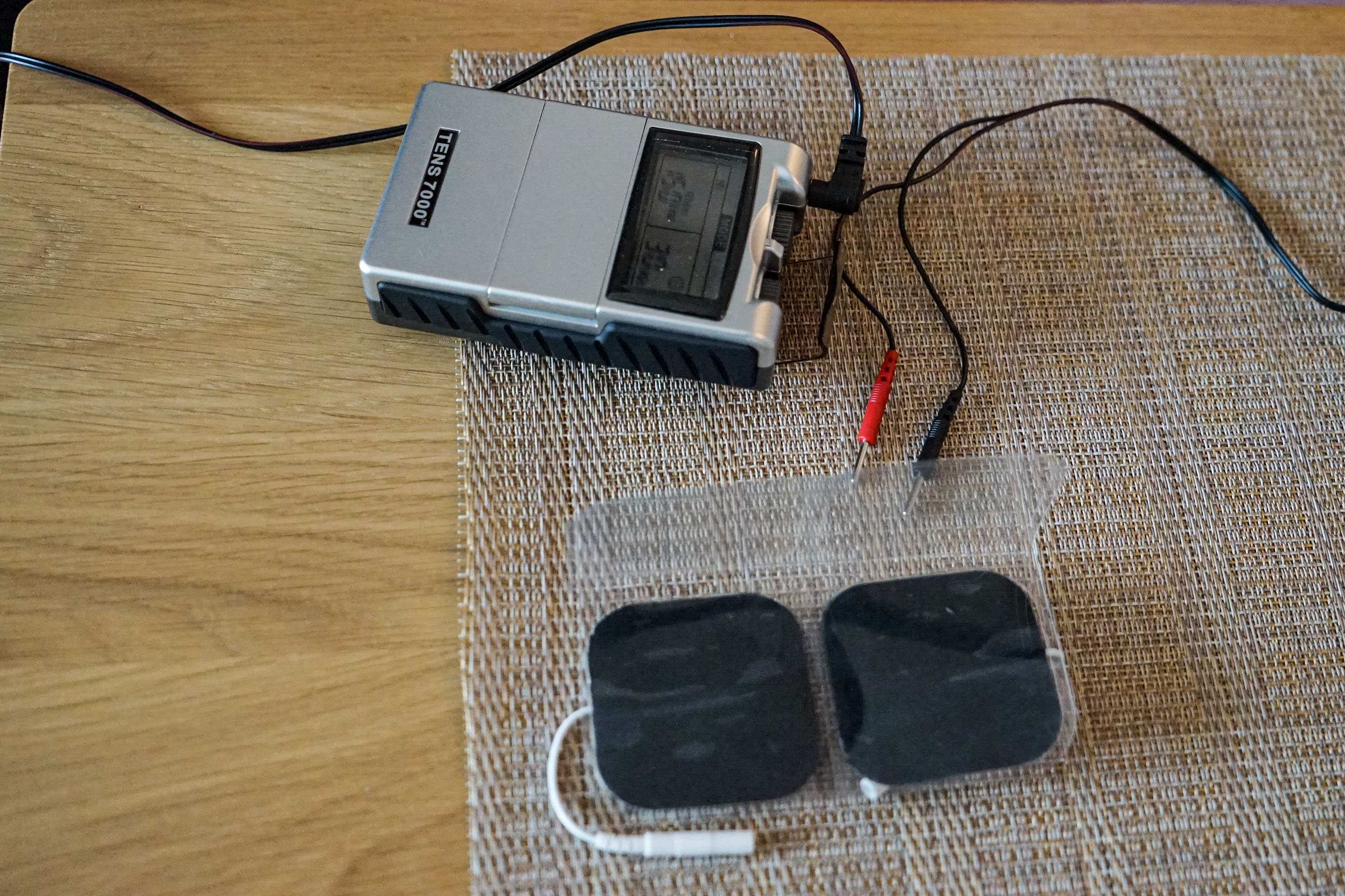
Some people with postmastectomy pain have gotten temporary relief from transcutaneous electrical nerve stimulation machines, which can change or block pain signals to the brain. (Amy Maxmen/KFF Health News)
Bank, a New York surgeon who founded a clinic focused on postmastectomy pain, said the pain is believed to be caused by nerves that are cut during surgery and then left alone.
The nerves can be sutured back to minimize pain, Bank said, but most breast surgeons have not been trained to do this. So it’s not surprising, he said, that some patients say their surgeons dismissed their pain after mastectomies.
“When doctors don’t have an answer or don’t know the solution, the easiest thing to do is say there’s no problem,” Bank said.
PMS has been documented among cancer patients since the 1970s. Although the condition has no official definition, many researchers describe it as frequent pain in the chest, shoulder, arm, or armpit that lasts at least three months after surgery.
Mastectomies aimed at preventing breast cancer have become more common among women with elevated risks, including genetic mutations and a family history of the disease.
Bassan’s grandmother died of breast cancer when she was 40 years old. After her father died of cancer in 2023, a genetic test showed she was at risk. Distressed and scared, Bassan sought a preventive mastectomy without hesitation, she said.
Bassan said she was also inspired by actress Angelina Jolie, who revealed her own preventive mastectomy in a 2013 column in The New York Times. Her story had such a significant impact on rates of genetic testing and preventive mastectomies that medical researchers have studied what they call the “Angelina Jolie effect.”
“That really influenced me,” Bassan said. “She made it seem, in some ways, quite simple.”

The consequences of Bassan’s surgery were much worse than he expected. Using a computer for hours caused crippling pain, so he lost his job and has been out of work for more than a year. Prescription pills relieved the pain but left her confused, she said. Desperate, she consulted several doctors until one suggested a nerve stimulation machine, which provided fleeting relief.
About nine months after her mastectomy, breast reconstruction surgery lessened Bassan’s pain, although she said it still returns in occasional waves. Although his surgeries were covered by insurance, Bassan estimated that his pain has cost him more than $200,000 in lost wages and depleted savings.
“I didn’t expect to pay this price to have this surgery,” Bassan said. “I don’t know if it was worth it.”
Other women have no real choice.
There is no ‘gold standard’ solution
Jeni Golomb, 48, was diagnosed with stage 2 cancer in both breasts in 2023 and underwent a double mastectomy as soon as she could.
Doctors made repetitive disclosures about possible complications, Golomb said, but she never heard the words “post-mastectomy pain syndrome” until after she had it.
Golomb now manages his chronic pain by taking 1,500 milligrams daily of gabapentin, an anti-seizure medication that can also be used to treat nerve pain. Golomb said he hopes to take the medication for years. If you miss a dose, the pain comes back with a vengeance.
“It was the worst pain I’ve ever felt,” Golomb said. “I had a birth of up to 10 centimeters, without medication, with one of my children, and that wasn’t that bad. It was unbearable.”
Gabapentin has been shown to be effective in helping some mastectomy patients with persistent pain, while others have responded to electrodes implanted in the spine, according to the Baylor study, published in 2024.
But that study also said there is “no current gold standard” for how to treat postmastectomy pain and there is a dearth of high-level evidence about which treatments are effective.
Baylor anesthesiologist Krishna Shah, a co-author of the report, said many patients eventually find a helpful treatment, but it often takes “a little trial and error” to identify what works for each.
And sometimes they never find it.
Susan Dishell, 67, said that after her mastectomy in 2017 for breast cancer and reconstruction surgery, she struggled for five years with pain in both shoulders, plus a burning sensation that her medical records identified as nerve pain.
Another surgery changed her breast implants to erase her shoulder pain in 2022, Dishell said, but doctors warned her then that her other pain was unlikely to improve.
Since then, he has tried prescription medications, steroid injections, CBD oil, acupuncture, physical therapy and chiropractic treatments.
None of that worked, he said, so he stopped trying.
“I haven’t slept all night since I had this,” Dishell said. “But it’s okay. It’s not the most terrible price to pay for not having breast cancer.”


